

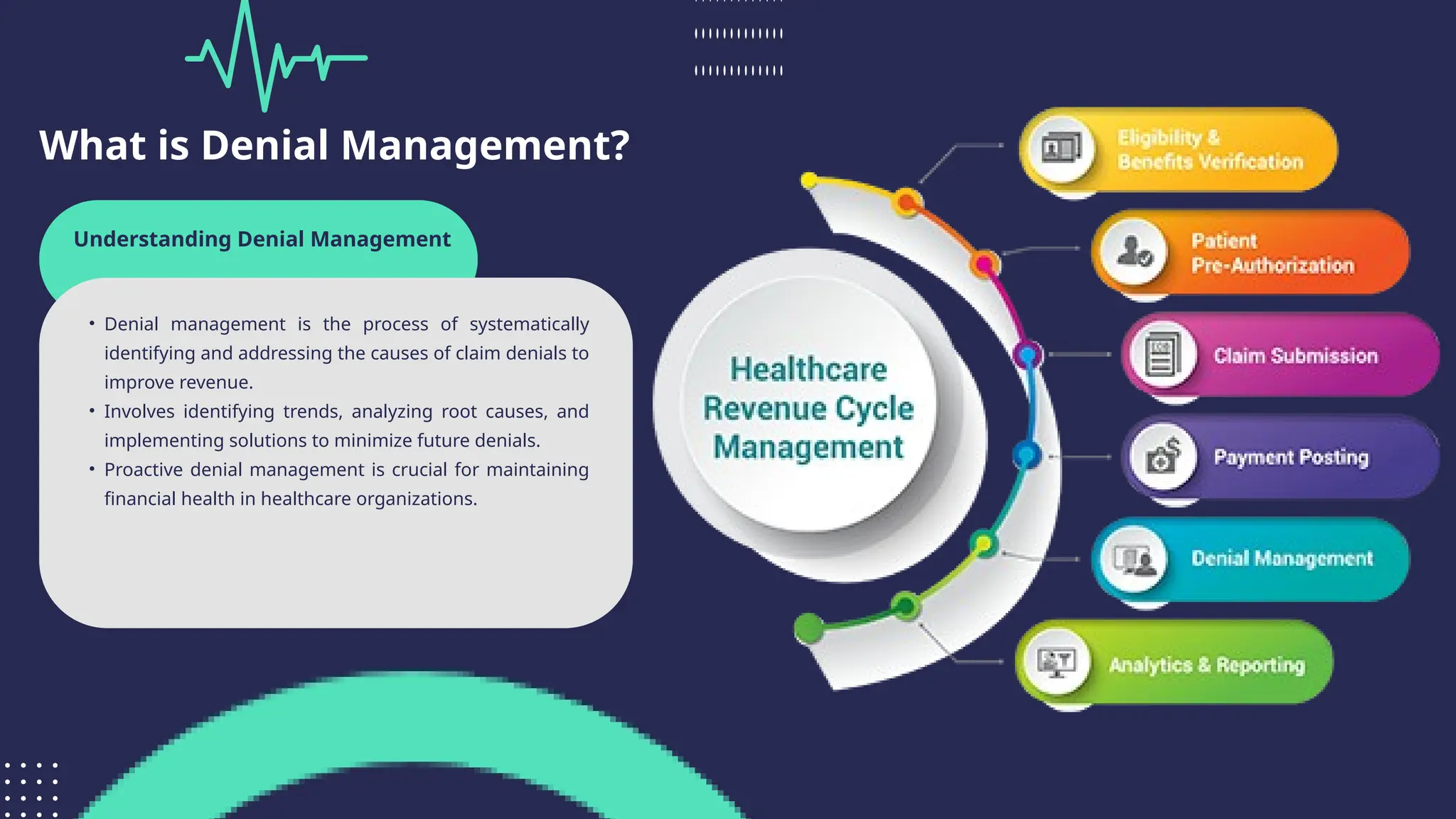
Healthcare organizations operate in a fast-moving environment where accuracy, efficiency, and financial stability are essential. One of the most persistent challenges in this setting is claim denials. Each denial represents time, money, and effort that must be spent to correct or appeal the issue. That is why strong denial management strategies have become a critical part of revenue cycle success. These strategies help organizations reduce errors, improve communication, protect revenue, and support better patient experiences.
Denials are not just a billing problem. They impact clinical teams, administrative workflows, patient satisfaction, and the broader financial health of an organization. Understanding how to prevent them—and how to address them effectively when they occur—can help healthcare facilities operate more smoothly and sustainably.
Why Denial Management Matters
Claim denials create financial pressure for healthcare organizations. Even when a denial can be corrected, the time and labor required add unnecessary cost. In some cases, claims are never paid at all simply because they were not resolved in time.
Effective denial management strategies are important because they:
• Reduce lost revenue
• Shorten payment cycles
• Decrease administrative workload
• Strengthen relationships with payers
• Improve overall billing accuracy
• Support long-term financial stability
By using smarter strategies, healthcare organizations can shift from a cycle of correction to a process built on prevention and consistency.
Understanding the Root Causes of Denials
Before implementing solutions, organizations must identify why denials happen. Some of the most common causes include:
• Incomplete or incorrect patient information
• Missing clinical documentation
• Coding inaccuracies
• Authorization or referral issues
• Eligibility complications
• Timely filing errors
These issues often come from workflow gaps, unclear communication, or outdated processes. The first step in strengthening denial management strategies is understanding where those gaps originate.
Preventing Denials Through Strong Front-End Processes
Front-end operations lay the groundwork for the entire billing cycle. When errors occur at the beginning, they often lead to denials later. Strengthening front-end processes is one of the most effective denial prevention strategies.
Key areas to strengthen include:
• Patient registration accuracy
• Insurance eligibility verification
• Securing proper authorizations
• Capturing complete clinical documentation
• Clear communication between clinical and billing teams
When front-end tasks are handled carefully, the likelihood of denials decreases dramatically.
Using Analytics to Support Smarter Decisions
One of the most powerful tools in modern denial management strategies is analytics. By studying trends and patterns, healthcare organizations gain insight into where mistakes occur most often.
Analytics can reveal:
• Which denial codes are most frequent
• Which payers deny claims at higher rates
• How long it takes to resolve certain types of denials
• Which departments struggle with documentation or coding
• Where workflow changes are needed
These insights make it possible to design solutions that address real problems rather than relying on guesswork.
Improving Coding Accuracy and Documentation
Coding errors and incomplete documentation are major contributors to claim denials. Strengthening these areas is a core part of effective denial management strategies.
Ways to improve include:
• Ongoing coding education
• Better access to clinical information
• Clearer documentation requirements
• Collaboration between clinicians and billing teams
• Regular internal audits
When documentation supports the services provided and codes reflect the clinical picture accurately, denials become far less common.
Creating a Structured Denial Resolution Workflow
Even with strong prevention strategies in place, some denials are unavoidable. A well-organized resolution process helps ensure that denials are corrected quickly and effectively.
A strong workflow includes:
• Fast review of denial notices
• Identifying the root cause
• Correcting errors when possible
• Gathering missing documentation
• Submitting timely appeals
• Tracking outcomes to inform future improvements
This approach prevents backlogs and ensures that claims are resubmitted accurately.
Encouraging Collaboration Between Departments
Denial management is not only the responsibility of billing teams. Effective strategies require cooperation across administrative and clinical departments.
Collaboration supports:
• Accurate clinical documentation
• Clear communication of treatment details
• Better alignment on payer expectations
• Faster problem-solving
• Stronger continuity throughout the billing cycle
When staff members understand how their work contributes to claims success, the entire revenue cycle becomes more effective.
The Role of Ongoing Staff Training
The healthcare industry changes constantly. Payer rules, coding requirements, and documentation standards are always evolving. Without proper training, staff members may unintentionally contribute to denials.
Training should focus on:
• Updated coding guidelines
• New payer policies
• Documentation best practices
• Technology updates
• Denial trends spotted through analytics
Well-trained teams are more confident, more accurate, and better prepared to prevent errors.
Improving the Patient Experience Through Denial Reduction
While denial management strategies focus on billing, they directly impact patient satisfaction. When claims are denied, patients can face surprise bills, delayed treatments, or confusing communication about coverage.
Reducing denials helps improve:
• Transparency in billing
• Timely approval of treatments
• Confidence in the healthcare system
• Patient trust and loyalty
A smooth financial process contributes to a better overall patient experience.
Looking Ahead: The Future of Denial Management
The future of denial management strategies will rely heavily on technology. Automation, predictive analytics, and artificial intelligence are becoming essential tools for spotting issues early and handling corrections efficiently.
However, technology is only part of the solution. Human expertise—especially in communication, documentation, and problem-solving—remains vital. The most effective systems bring together strong tools and skilled professionals.
Conclusion
Denial management strategies are essential for protecting the financial health of healthcare organizations. By understanding the root causes of denials, strengthening front-end processes, improving documentation, using analytics, and fostering collaboration, organizations can reduce revenue loss and build more efficient operations.
A strong denial management approach supports not only financial success but also better patient experiences and smoother clinical workflows. As healthcare grows more complex, effective denial management will remain a key part of long-term stability and growth.