

Online sellers and store builders run into the same small wall constantly. You are putting together a product listing, a marketing graphic, a help article or a store template, and you need a receipt or an order confirmation to appear in it. A real one means exposing a real customer’s details, and a blank placeholder looks unfinished. The fix is to make a fake receipt that looks completely real and contains nothing real, which is faster and cleaner than either alternative.
Where e-commerce sellers actually need this
It comes up more often than you would expect. A marketplace seller wants to show what the packing slip or order receipt looks like inside a listing. A store template designer needs a realistic order confirmation in the demo. A support team is writing a help article and wants to annotate a sample receipt. A dropshipper is building marketing creative that shows the buying flow. A developer is mocking up an order confirmation email or a thank you page. In every case the receipt is illustrative content, and it has to look genuine without belonging to a real buyer.
Why a generator beats the alternatives
Screenshotting a real order means scrubbing names, addresses, card details and order numbers, and you will always miss something. Building one by hand in a design tool is slow and tends to look slightly wrong. A generator built from real scans gives you a believable receipt with invented details in under a minute, which is both faster and safer because there is no real customer data to leak in the first place.
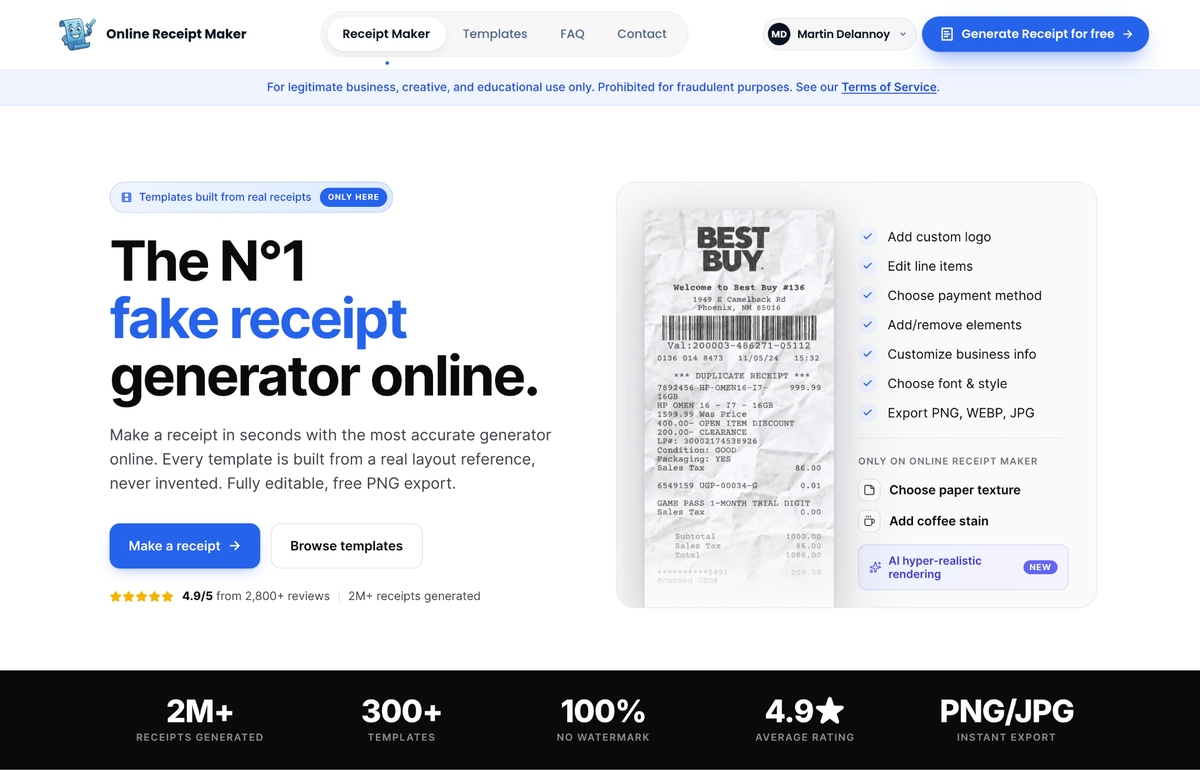
Online Receipt Maker is a solid starting point because the templates are reverse engineered from real layouts and the editor is fully live. You can set the store, the items, the prices, the order date and the payment method, then export a clean image that drops straight into a listing graphic or a help doc. The result reads as a genuine order receipt rather than a sketch of one.
How to make one that fits an online order
A few specifics make an e-commerce receipt convincing. Build it around an order, so include an order number, an itemised list with quantities, a shipping line if relevant, and the right tax treatment for the scenario. Use a believable customer name and address that are clearly invented rather than a real person’s. Match the payment method to online buying, typically a card with masked digits or a digital wallet. And keep the totals reconciled, since subtotal plus shipping plus tax has to equal the total. These are the details that make an order receipt read as real.
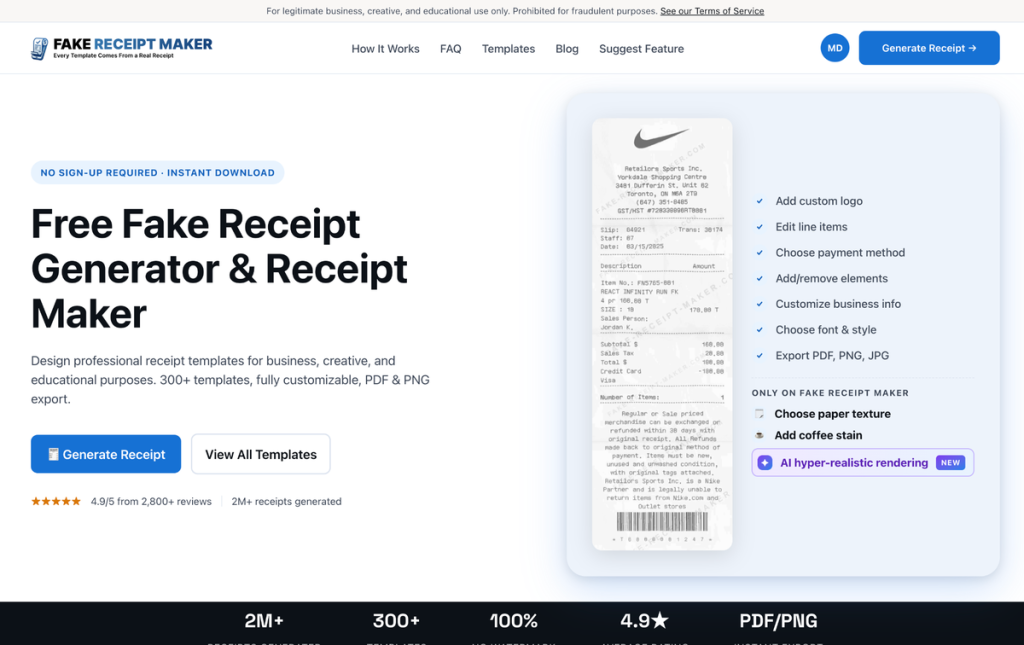
When you need several variations, for a gallery of listing images or a set of help article screenshots, Fake Receipt Maker is the quicker route. Its three step flow and PDF or image export let you produce a batch of different orders fast, so a demo store or a tutorial feels populated by real activity rather than one repeated example.
Get the order specific details right
An e-commerce receipt has a few elements a store purchase slip does not, and including them is what makes it read as a real online order. The order number is the big one, since every online purchase has one and a missing or oddly formatted number looks wrong. A shipping line, with a method and cost, belongs on most order receipts and is easy to forget. The customer block, with a clearly fictional name and a shipping and billing address, grounds the order as something that was actually placed. And the payment line should reflect online buying, typically a masked card or a digital wallet rather than cash. Getting these right separates a believable order confirmation from a generic in store receipt wearing an online label.
Keep it realistic, not perfect
A common mistake is making the receipt too clean. Real order receipts have texture: a slightly long product name that wraps, a discount line, a loyalty note, a specific shipping method. Including a couple of those small realities makes the mockup more believable than a tidy three line list. If the image will be shown at high resolution in a listing, the realism extras like paper texture help it read as a genuine printout rather than a flat graphic.
A note on legitimate use
Illustrating a listing, a template, a help article or a marketing graphic with realistic sample data is exactly what these tools are for, and both sites state their legitimate use only positioning openly on their own pages. The line is clear: a sample receipt that demonstrates your store or product is fine, while using a fabricated receipt to deceive a buyer, a platform or a payment provider in a real transaction is not, and both services prohibit it. Sample content for your own store sits well within bounds.
Bottom line
E-commerce work constantly calls for a receipt that looks real without belonging to a real customer, and scrubbing a genuine order or hand building one are both slow and risky. A fake receipt generator lets you make a believable order confirmation with invented details in under a minute, ready to drop into a listing, a template or a help doc. Build it around a plausible order, keep the totals honest, and your mockup will look like a real store without putting anyone’s data on display. Keep a small set of these order receipts on hand and you can refresh a listing or a help article in seconds whenever your products or prices change, rather than scrambling for a real order each time.
