

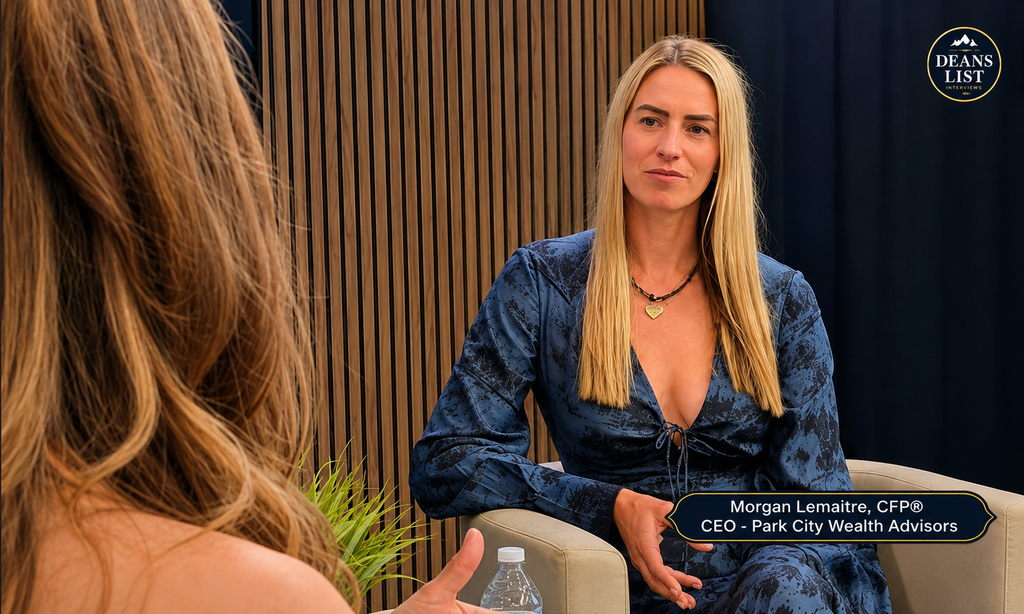
The Park City wealth advisor, former competitive figure skater The entrepreneur wants to help 10,000 women become more confident with money and create a ripple effect that lasts for generations.
For Morgan Lemaitre, CFP®, wealth has never been about accumulating more. It is about freedom.
Freedom to make choices. Freedom to pursue meaningful work. Freedom to care for the people you love. And perhaps most importantly, freedom to build a life in which money supports your purpose rather than becoming the purpose itself.
That philosophy was at the center of Lemaitre’s recent conversation on The Dean’s List Podcast. As CEO and Founder of Park City Wealth Advisors, Lemaitre has built a career around helping families navigate their financial lives, with a particular passion for helping women become more informed and confident about money.
But her journey to wealth management began somewhere few would expect: on the ice.
From the Ice Rink to Wealth Management
Lemaitre began figure skating at just four years old. By five or six she was competing, and by elementary school she was attending school part time to accommodate a rigorous training schedule. At only 12 years old, she made her first junior world team.
That childhood required an extraordinary degree of focus, discipline and sacrifice. Looking back, Lemaitre sees those years as foundational to the way she approaches business and life today.
She learned early that success rarely follows a perfect trajectory. A skater can train endlessly and still fall in front of hundreds of spectators. What matters afterward is whether you gave the performance everything you had.
That mindset followed Lemaitre far beyond the rink. During the interview, she described one of the principles that continues to guide her: maintaining a beginner’s mindset.
“You have to stay curious,” Lemaitre said. “The moment we start to think that we know everything, we become dangerous to ourselves and others.”
It is an outlook that has encouraged her to keep evolving in an industry that can sometimes resist change. “Don’t be afraid of change,” she said. “Lean into it.”
Interestingly, finance was not Lemaitre’s original destination.
Before entering wealth management, she trained in the culinary world. During her conversation with Dean, she explained that what she ultimately loved about food wasn’t merely preparing a great dish, it was what happened around the table.
Food creates community. It brings people together. A memorable meal can become part of a family’s story.
Years later, Lemaitre began recognizing a surprising parallel between that experience and her work with affluent families.
Once people reach a certain level of financial security, another dollar or another possession may not substantially change their everyday lives. What often becomes more valuable are experiences, relationships and memorable moments.
And that realization helped shape her philosophy of wealth.
Money Is a Tool, Not the Destination
Money remains an uncomfortable subject in many households. People may avoid discussing it because they are embarrassed by how little they have, uncomfortable with how much they have, or never learned how to talk about finances openly. Lemaitre would like to change that.
In her view, money is fundamentally a tool, one that, when managed intentionally, can remove worry and provide people with more choices about how they spend their time and how they show up for others.
The question therefore becomes less about How much can I accumulate? and more about What is this money allowing me to do?
That distinction becomes especially important for people who have spent decades saving and investing but have difficulty giving themselves permission to enjoy what they have built.
Lemaitre told Dean that some new clients arrive in her office already financially prepared to make the change they have been dreaming about. What they need is reassurance that they have done the work and can finally act.
Sometimes financial planning means telling someone, in effect: You have enough. Go live.
That might mean leaving a job they no longer enjoy, traveling, spending more time with family, supporting a cause or simply creating the space to be present.

It leads directly to one of Lemaitre’s most striking philosophies:
“Wealth isn’t the point.”
It may seem like an unusual statement from someone who manages wealth for a living, but Lemaitre sees no contradiction.
“Wealth truly is just the tool,” she explained. If she is doing her job well, she said, clients should ultimately be able to spend less time thinking about money and more time living, pursuing their passions and making a difference.
Her conclusion is simple and powerful: “Wealth isn’t the point. Living is. Living your biggest version is, and that’s what wealth allows us to do.”
Changing the Way Women Talk About Money
For Lemaitre, financial empowerment carries another dimension. She wants women to become comfortable talking about money.
During the interview, Dean and Lemaitre discussed the complicated expectations women can face around ambition, career, motherhood and success. Lemaitre challenged the idea that ambition somehow makes a woman less caring or less committed to her family.
For many women, she argued, ambition is itself an expression of caring for their families. The larger issue is helping women define success for themselves rather than measuring their lives against someone else’s expectations. That principle extends directly into finance.
Lemaitre believes our earliest attitudes toward money often begin at home. Children observe what their parents say, or don’t say, about finances. They notice whether money creates anxiety, conflict, secrecy, confidence or opportunity.
That means changing one woman’s relationship with money can affect far more than one person. “My mission to help women, it’s not just singular that I want to help one woman feel more confident,” Lemaitre explained. “I’m creating a ripple effect.”
When a woman changes the way she understands and discusses money, Lemaitre believes it can influence her daughter, sister, friends and eventually another generation. Financial literacy, in that sense, becomes generational.
Confidence Doesn’t Mean Knowing Everything
One obstacle Lemaitre repeatedly encounters is the belief that people should already understand finance before they seek professional guidance. That assumption can be particularly intimidating for accomplished women.
Someone can be a successful executive, entrepreneur or highly educated professional and still feel embarrassed asking what she believes is a “basic” financial question. Lemaitre rejects that definition of confidence.
Financial confidence does not require knowing how to do everything yourself. It means understanding when to ask questions and surrounding yourself with knowledgeable people who have your interests in mind.
“Confidence doesn’t mean we need to know how to execute,” she said. “It means we need to have somebody in our corner that’s looking out for us.
” And for someone overwhelmed by where to begin, her advice is refreshingly uncomplicated:
Start.
Look at what you spend. Create a budget. Ask a question. Make the phone call. Gather information. “You just have to start,” Lemaitre said of developing financial confidence. Because avoiding the numbers rarely eliminates fear. Often, not knowing is precisely what creates it.
The 10,000-Woman Goal
Lemaitre has now put a number behind her mission: 10,000 women.
Her goal is not simply to provide financial advice to 10,000 people. She wants to help 10,000 women become genuinely confident with money. The size of the goal is intentional.
“10,000 women is really like a stake in the ground for me,” she told Dean. The number forces her to think beyond individual client relationships and ask a much bigger question: How do you create systemic change in the way women understand and interact with wealth?
If one financially empowered woman changes the conversations she has with her children, and those children carry a healthier understanding of money into their own families, the impact becomes exponential. “Wealth is generational and our relationship with wealth is generational,” Lemaitre said. The 10,000 women are therefore only the beginning. The real goal is the ripple effect.
Building a Life Worth Being Proud Of
The conversation eventually moved beyond money altogether and toward legacy.
Dean asked Lemaitre to imagine herself decades from now, sitting with her daughter and looking back on her life. What would need to have happened for her to believe she accomplished what she came here to do?
Lemaitre’s answer returned to promises she made to herself when she entered finance nearly 20 years ago. The first was that she wanted to be able to look in the mirror and be proud of the person looking back. The second was that she wanted to someday tell her grandchildren a story about her life that she was proud and excited to tell. Those promises have shaped the way she approaches her firm as well.
Her mission, she said, is to “do the right thing even when it’s the hard thing” and to look for outcomes in which success does not have to come at someone else’s expense. It is another lesson carried over from the rink: play the long game, accept setbacks, keep learning and continue moving forward without sacrificing integrity for a shortcut.
Perhaps that is why Lemaitre’s philosophy feels less like traditional wealth management and more like life planning. The portfolio matters. The investments matter. The planning matters.
But only because of what they make possible. A woman who understands her finances have choices. A family that plans intentionally has options. Someone who has spent decades preparing for the future may finally receive permission to stop postponing the life they worked so hard to create.
And when financial confidence is passed from one generation to another, the value can extend far beyond an investment account. For Morgan Lemaitre, that is what wealth is ultimately supposed to accomplish.
Not simply more money.
More freedom. More choices. More confidence. More meaningful moments. And, ultimately, a life worth remembering.
Learn more about Morgan, visit ParkCityWealthAdvisors.com
